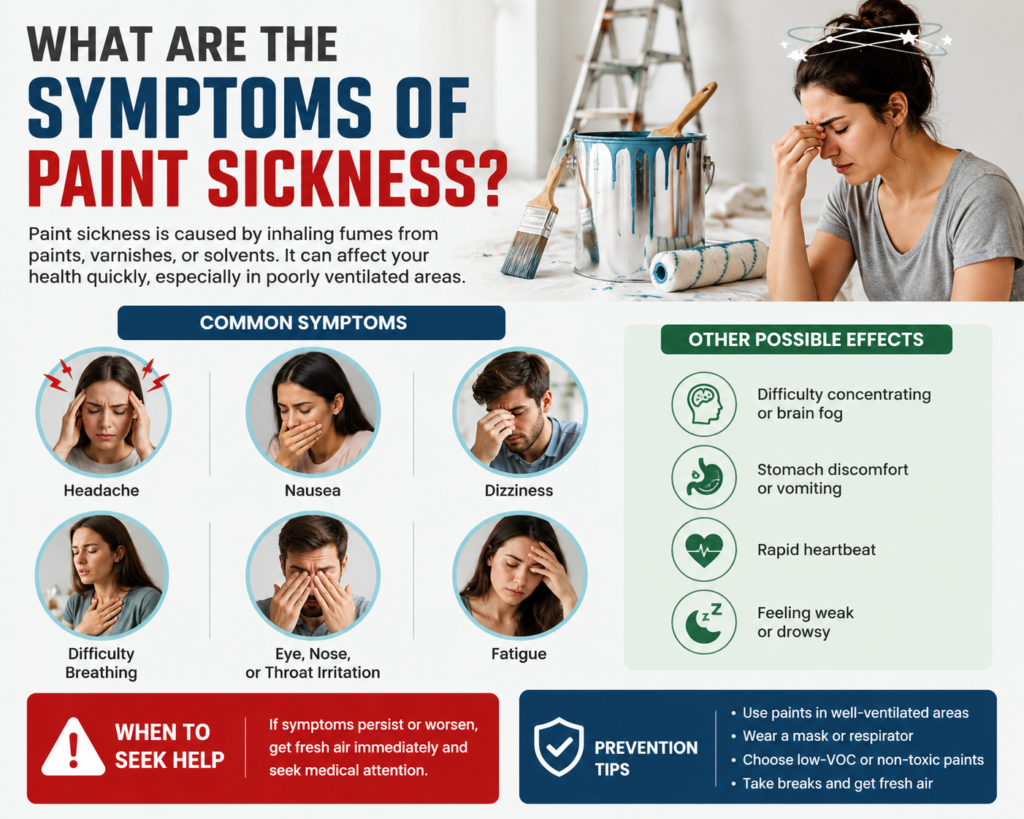
Paint sickness is an illness that people normally experience after inhaling intensive paint fumes in a house. It occurs when the chemicals present in fresh paint are combined with air in enclosed areas and they come into contact with the body. Symptoms such as headache, dizziness or sore throat in the eyes and throat are mild and experienced by many people. It tends to dissipate with a change of air or opening of windows to have air. Knowledge of paint sickness will enable you to remain safe and prevent unease during painting in your home. Air always does the trick.
Fresh Paint Effects: How Chemicals Impact Human Health
Exposure level, indoor time, and air quality vary in how paint sickness manifests, and when you learn about its symptoms, you can respond promptly and take care of your health at an early stage.
Read more:
Headache
One of the most prevalent symptoms of paint sickness is headache. It usually begins as a light pain in the forehead or temples following breathing of fumes. The pain can become more intense when it is kept on but normally ceases when the individual takes a walk to new environment.
Dizziness
The other frequent symptom that people experience due to excessive exposure to fumes of paint is dizziness. The room may seem to be rotating or you may be unstable on your feet, in places that are not ventilated well with strong chemical odor in the air. Rest helps recovery.
Eye irritation
Eye irritation occurs when the eye is exposed to paint fumes or tiny particles. It can lead to burning, watering or redness, which is why it is difficult to comfortably have their eyes open and work in freshly painted or ill-ventilated rooms. Wipe off eyes with clean water.
Nausea
Nausea is a sensation of stomach discomfort which may result due to inhalation of fumes of strong paints. People can develop a desire to vomit, or lose their appetite, particularly when they have spent a long time in a closed room with heavy smelling paint. Go outside to relieve yourself.
Throat irritation
Long-term breathing in of paint fumes can result in throat irritation. It can also lead to dryness, soreness or scratchiness in the throat making it difficult to talk or swallow until the individual has access to air. Take water and lay throat to rest.
Fatigue
Paint sickness causes fatigue in the person, leaving them tired, weak and lacking energy. This may occur after being in a room with lots of fumes and eventually, the body recuperates as soon as it is in the fresh air. Have breaks and breathe out frequently.
Coughing
In the presence of intense fumes of paint or chemicals in the air, coughing may take place. It is a mechanism of the body in which it is clearing the throat and lungs of irritants and it is usually better when an individual relocates to a well ventilated location. Keep out of the sunlight and sleep well in doors.
Trouble focusing
One of the symptoms of paint sickness that is not well known is trouble focusing. Individuals can experience mental retardation, confusion or lack of concentration upon inhalation of strong fumes, particularly in tight areas where there is a lack of fresh air. Breaks and going outside will again clear mind in a short period.
Conclusion
Paint sickness is not very dangerous but may be unpleasant in case you remain in a stuffy room with intense smell of paints too long. The positive aspect is that when fresh air and rest are taken you tend to feel better and the symptoms become better. Ventilation: When painting, always make sure that there is sufficient ventilation, and that you take breaks to take care of your health and comfort during the process at home or work. This assists in avoiding irritation, dizziness and other effects that people tend to experience when painting. Always keep the air in circulation.
FAQs
Why does paint smell make people sick?
Powerful odors of chemicals in paint impact breathing and cause discomfort symptoms.
Will fresh air get rid of paint sickness?
Yes, getting out and inhaling clean air normally makes symptoms get better quickly.
Why do eyes sting when it comes to painting in a house?
Paint fumes are irritating to the eye surface with the sensation of burning, watering and reddening.
Does paint odour cause harm during exposure during sleep time?
Yes, it can bother to sleep in newly painted closed rooms and make one breathe and get a headache.
What can be done to ensure that workers are safe when painting rooms?
They ought to wear masks, open windows and take frequent breaks to be safe.